Best Crypto Prop Firm
for Beginners
New to crypto trading? G Club Capital is the perfect place to start. Zero entry fees mean zero financial risk. Learn to trade, prove your skills, and earn funded capital up to $10M — all without paying a single dollar upfront.
Start Free Challenge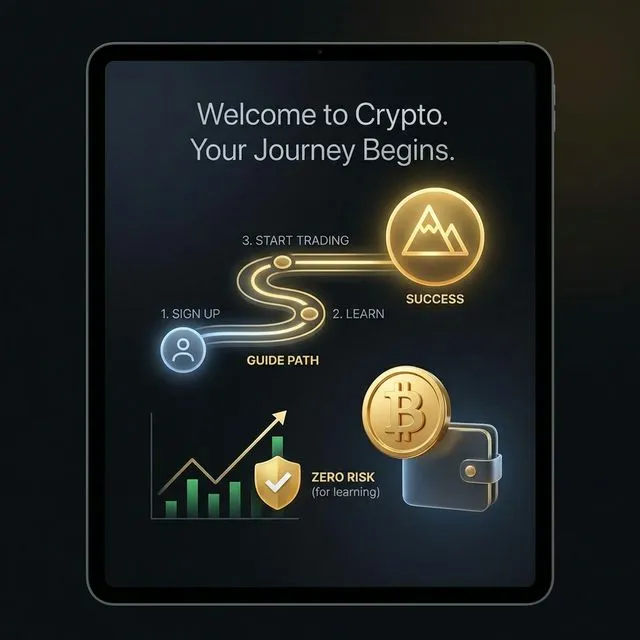
The Best Prop Firm for Beginner Crypto Traders
No fees, no pressure, no deadline. Learn at your pace and get funded when you're ready.
Zero Financial Risk
Unlike other prop firms that charge $200-$1,000 per attempt, G Club is 100% free. Learn to trade without worrying about losing money on challenge fees.
Learn at Your Own Pace
No 30-day deadlines, no minimum trading days. Take weeks or months to develop your strategy. G Club has zero time pressure.
Fail and Retry — Free
Every professional trader has losing streaks. With G Club's unlimited free retries, failure is just a learning opportunity, not a financial setback.
How Beginners Can Get Funded Trading Crypto
What is a crypto prop firm? A proprietary trading firm (prop firm) provides traders with funded capital to trade. Instead of risking your own money, you trade with the firm's capital and share the profits. G Club Capital is a crypto-native prop firm — we focus exclusively on cryptocurrency trading. Unlike forex or stock prop firms, G Club operates 24/7 in the digital asset market and uses a non-custodial model where you trade directly on your own Bitunix exchange account. This means you're never giving your money to a platform — you always have full control of your funds.
Why beginners should start with G Club:
- $0 entry fee — Other prop firms charge $155-$1,080 per challenge attempt. G Club is completely free. This means you can start your trading journey without any financial risk from challenge fees. Your only cost is the capital you trade with on your own account.
- Unlimited retries — If you fail a challenge, start over immediately at no cost. Use each attempt as a learning experience. Most successful traders at G Club passed on their 2nd-5th attempt. Failure isn't permanent — it's part of the learning process.
- No time limit — Take as long as you need. There's no 30-day deadline forcing you to trade before you're ready. Some beginners take 3-6 months to pass their first challenge, and that's perfectly fine.
- Simple rules — Hit a 10% profit target while staying within drawdown limits (10% daily, 20% overall). No complex multi-phase requirements, no minimum trading days, and no strategy restrictions.
- Real market experience — Because you trade on your own Bitunix account, you're gaining real exchange experience from day one. There's no simulated environment or demo account — every trade you make is real market practice.
Step-by-Step Guide to Getting Started
- Register on G Club Capital — Create your free account in minutes. No credit card required, no subscription fees, no hidden costs.
- Open a Bitunix account — Set up your trading exchange account using our partner link. Complete KYC verification as required by the exchange.
- Fund your personal account — Deposit your starting capital (minimum varies by tier, starting from $1,000). This is your money on your exchange account — G Club never touches it.
- Learn the basics — Before risking capital, understand candlestick charts, support/resistance levels, position sizing, and stop losses. Use free resources like YouTube, TradingView education, and our Telegram community.
- Start trading — Trade crypto on your Bitunix account. Aim for 10% profit while respecting the drawdown rules.
- Get audited — Our team reviews your trading performance via API verification.
- Receive funding — Get 10x your capital as a funded trading account. Start earning 70% of all profits.
Essential Concepts Every Beginner Must Learn
Before attempting the G Club challenge, beginners should master these fundamental trading concepts:
1. Chart Reading. Learn to read candlestick charts at different timeframes (1-minute, 15-minute, 1-hour, 4-hour, daily). Understand what the wicks and bodies of candles represent. Learn basic patterns like engulfing candles, doji, and hammer candles. You don't need to memorize every pattern — focus on 3-5 reliable patterns and master them.
2. Support and Resistance. These are the most important concepts in trading. Support is a price level where buying pressure historically prevents further decline. Resistance is where selling pressure prevents further advance. Identifying these levels is the foundation of every trading strategy, from scalping to swing trading.
3. Position Sizing and Risk Management. Never risk more than 1-2% of your account on a single trade. This is the most important rule in trading and the one that separates successful traders from failed ones. On a $10,000 challenge account, 1% risk means your maximum loss per trade is $100. This gives you 50+ chances to learn before reaching the 5% withdrawal point.
4. Stop Losses. Always set a stop loss on every trade. A stop loss automatically closes your position when price moves against you by a certain amount. This prevents a small loss from becoming a catastrophic one. Never trade without a stop loss, and never move your stop loss further from your entry to "give it more room."
5. Trading Psychology. Emotional control is what separates profitable traders from losers. Accept that every trade has a chance of losing. Don't revenge trade (increasing size after a loss). Don't overtrade (taking too many positions). Follow your plan, accept losses as part of the process, and focus on long-term consistency.
Beginner-Friendly Trading Strategies
These simple strategies are ideal for beginners starting their G Club challenge:
Support/Resistance Bounce Trading: The simplest strategy for beginners. Identify clear support levels on the 1-hour or 4-hour chart. When price approaches support and shows a reversal candle (hammer, engulfing), enter long with a stop loss just below support. Target the next resistance level. This strategy has a clear entry, clear stop loss, and clear target — perfect for beginners learning systematic trading.
Moving Average Crossover: Use two moving averages (9 EMA and 21 EMA) on the 1-hour chart. When the 9 EMA crosses above the 21 EMA, that's a potential buy signal. When it crosses below, it's a potential sell signal. This strategy filters out noise and keeps beginners on the right side of the short-term trend. It won't work in ranging markets, but it's excellent during trending conditions.
Trend Following with BTC: For absolute beginners, consider trading only BTC/USDT on the daily chart. Identify the overall trend direction (higher highs and higher lows = uptrend). Enter long positions on pullbacks to the 20 or 50 EMA. This approach is slower but significantly reduces the complexity and emotional pressure of active trading while still allowing you to reach the 10% profit target over time.
Common Beginner Mistakes to Avoid
- Trading too many pairs at once — Start with 1-3 pairs (BTC/USDT, ETH/USDT, and one altcoin) until you're comfortable. Master a few markets before spreading across dozens of assets.
- Risking too much per trade — The #1 account killer. Stick to 1-2% risk per trade maximum. It feels slow, but it keeps you in the game long enough to learn.
- Overtrading — Quality over quantity. Taking 5 well-planned trades per week beats 50 impulsive trades. If you don't see a clear setup, don't trade. The market will still be there tomorrow.
- Using excessive leverage — Start with 3-5x leverage maximum. Higher leverage amplifies your mistakes, and as a beginner, you will make mistakes. Low leverage gives you room to learn.
- Ignoring stop losses — "It'll come back" is the most expensive belief in trading. Always use stop losses and never remove them from a losing trade.
- Chasing pumps — When you see a coin has already pumped 30%, resist the urge to buy. You're likely buying at the top. Wait for a pullback or find another opportunity.
Your First 30 Days at G Club
Here's a recommended progression for your first month as a G Club trader:
Week 1: Don't trade with real money yet. Set up your Bitunix account, explore the interface, practice placing and canceling demo orders. Study candlestick charts on TradingView. Join the G Club Telegram community and observe how experienced traders think about setups.
Week 2: Start with tiny positions (minimum size) to get comfortable with real execution. Focus on one pair (BTC/USDT) and one timeframe (1-hour). Practice setting stop losses on every trade. Track every trade in a simple journal: entry price, stop loss, target, outcome.
Week 3: Review your journal from Week 2. Identify what worked and what didn't. Adjust your strategy based on data, not emotions. Begin to increase position sizes slightly within your 1-2% risk rule.
Week 4: By now you should have a basic system that you trust. Start the G Club challenge for real. Remember: there's no time limit and retries are free. Focus on consistency over profit. Even small daily gains compound into the 10% target over a few months.
G Club Features for Beginners
$0 to Start
No entry fees, no hidden costs, no subscription. G Club is 100% free for all traders, including beginners. Your only investment is the capital on your own exchange account.
Simple Challenge Rules
Two clear rules: hit 10% profit and stay within drawdown limits. No complex requirements or confusing multi-phase systems. Simple enough for any beginner to understand.
Telegram Support
Join our Telegram community for support, tips, and to connect with other traders. Get help from experienced funded traders and our support team. We're here to help you succeed.
Start Small, Scale Big
Begin with a small tier and work your way up. G Club's scaling plan lets you grow from $10K all the way to $10M as your skills and consistency improve over time.
Start Your Beginners Challenge
Choose your tier and begin trading for free. No entry fees, no risk.
Beginners — Frequently Asked Questions
Ready to trade as a funded trader?
Join G Club Capital for free. Zero entry fees, non-custodial trading on your own Bitunix account. Start in minutes.
Start Free Challenge